Select your language
 ID
ID 


Program Activities
Business Analysis Training Boosts Development of Free-Range Chicken Processing Unit at OMB Tafena Kuan, Kairane Village
YSI
Hits: 2
2 minutes read
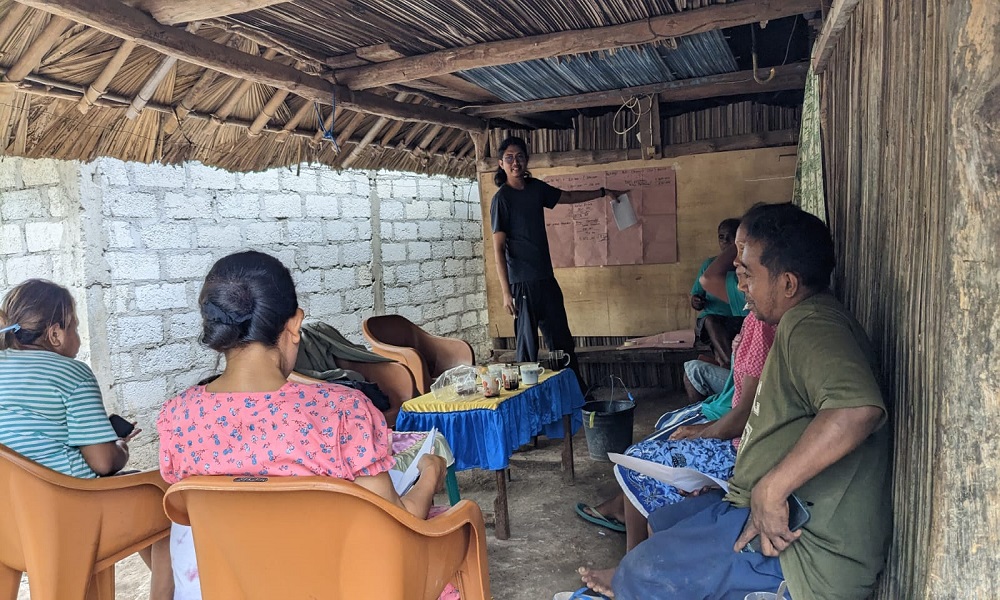
On Friday, October 10, 2025, Yayasan SHEEP Indonesia (YSI) and the community-based organization (OMB) Tafena Hit Kuan held a business analysis capacity-building training for group members in Kairane Village. The training aimed to strengthen participants’ ability to conduct business analysis that would support the development of production units and free-range chicken farming.
Rossi, the Kupang Area Manager, emphasized that business analysis is key to planning viable enterprises that generate economic benefits. Participants learned about the main components of business analysis, including market analysis, cost calculation, profit estimation, and risk identification. Through group discussions, they shared experiences and identified challenges in running small-scale businesses in the village, such as limited capital and market access, to develop strategies to address them.
The session continued with practical exercises using a real group business plan focused on developing a free-range chicken processing unit and its derivative products, such as shredded chicken (abon) and alternative feed. Participants calculated estimated production costs, determined realistic selling prices, and mapped market opportunities around the village. One participant shared that the training helped them better understand the relationship between costs, profits, and marketing strategies. The facilitator highlighted that business analysis is not only about profit but also serves as a foundation for strengthening local food security and economic self-reliance. Participants were encouraged to apply the lessons learned and start developing more structured and measurable group business plans.
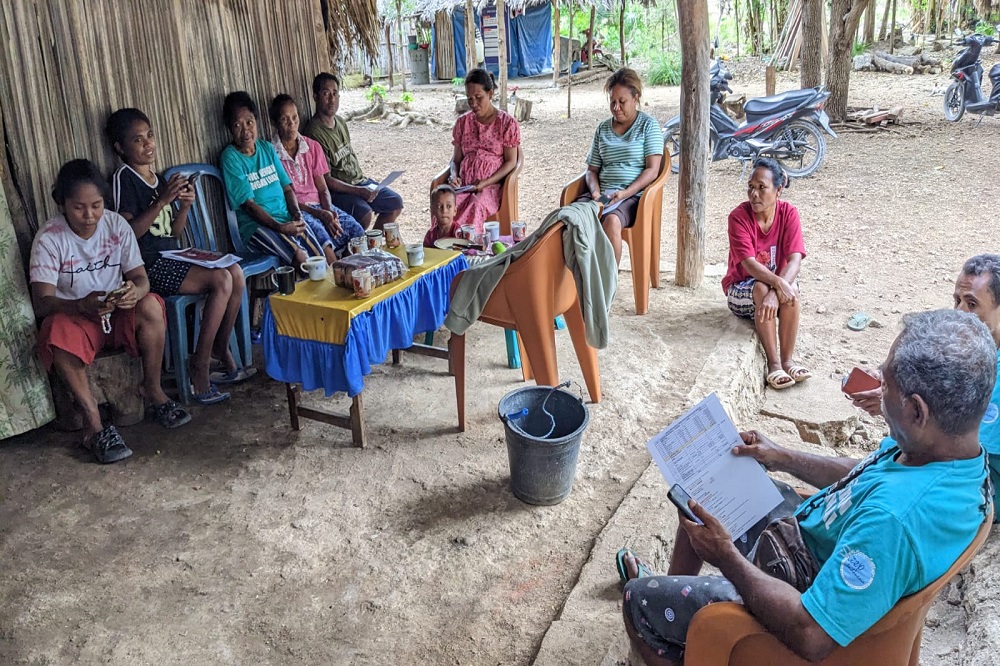
As a follow-up, participants and facilitators will prepare more comprehensive business analyses for each commodity being developed. They will also draft group work procedures covering task distribution and business management, and design a production unit that integrates disaster risk reduction and GEDSI (Gender Equality, Disability, and Social Inclusion) perspectives. In addition, the group plans to expand partnerships with the Kupang District Government, village authorities, other assisted OMBs, local producers, and buyer networks from villages to urban areas to enhance technical capacity and market access.