Select your language
 ID
ID 


Program Activities
Public Discussion on Landscape Governance and Spring Protection in the Santong and Murus Malang Landscapes
YSI
Hits: 9
3 minutes read
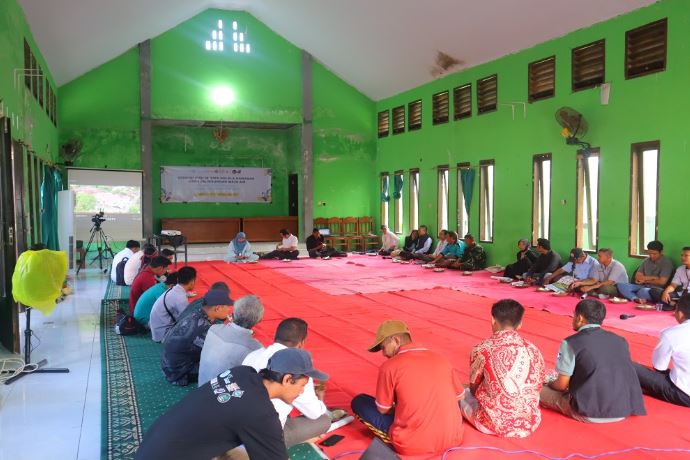
On 4 February 2026, a Public Discussion on Landscape Governance and Spring Protection in the Santong and Murus Malang Landscapes was held. The event was organized by the Civil Society Working Group for Landscape-Based Disaster Risk Reduction and Climate Change Adaptation, consisting of SHEEP Indonesia, YLKMP, KONSEPSI NTB, AMAN North Lombok, GPA Santong, HWDI North Lombok, AMPH, and AJI Mataram. The discussion served as a dialogue platform to address sustainable landscape management and the protection of springs as vital sources of community livelihoods.
A total of 112 participants attended the event. They included representatives from the Provincial Government of West Nusa Tenggara, the North Lombok Regency Government, Kayangan and Bayan Subdistrict Governments, local police and military units, forest and watershed management authorities, Forest Farmer Groups, Water User Associations, TSBD, representatives of indigenous communities, the local water utility company, civil society organizations, and local communities. The meeting provided a shared space to exchange perspectives, field experiences, and challenges in safeguarding landscapes and water sources in Kayangan and Bayan Subdistricts.
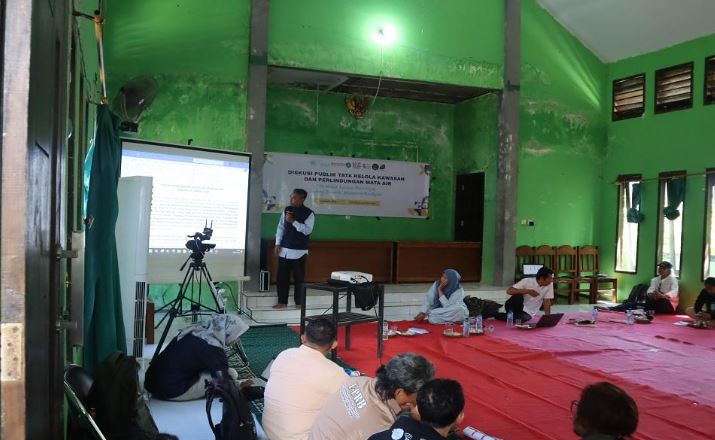
In his remarks, Assistant II Gatot Sugihartono emphasized that public discussions are essential to align perspectives and coordinate future actions. He highlighted the importance of synchronizing policies through programs and innovations that align with existing policy documents in North Lombok Regency. He also stressed the need for strengthened communication, facilitation, and joint monitoring to ensure that actions taken remain aligned with shared objectives.
The discussion was conducted openly and addressed the status and functions of protected areas and water catchment zones, as well as various threats to springs such as land conversion, forest encroachment, unsustainable cultivation practices, and pollution. Participants also raised concerns about social and economic impacts, including declining agricultural yields and rising household costs for clean water. Coordination challenges among stakeholders were highlighted, particularly in planning alignment, field supervision, and enforcement of area protection regulations.
Through the dialogue, participants recognized that landscape management and spring protection cannot be carried out independently. The government plays a role in policy formulation, regulatory strengthening, supervision, and budgeting for conservation programs. Area managers are responsible for guidance, forest rehabilitation, and controlling land use in accordance with regulations. Indigenous peoples and local communities contribute through local wisdom-based management practices, collective conservation efforts, and community-level monitoring. Collaboration was identified as the key to ensuring sustainable landscapes and reliable access to clean water.
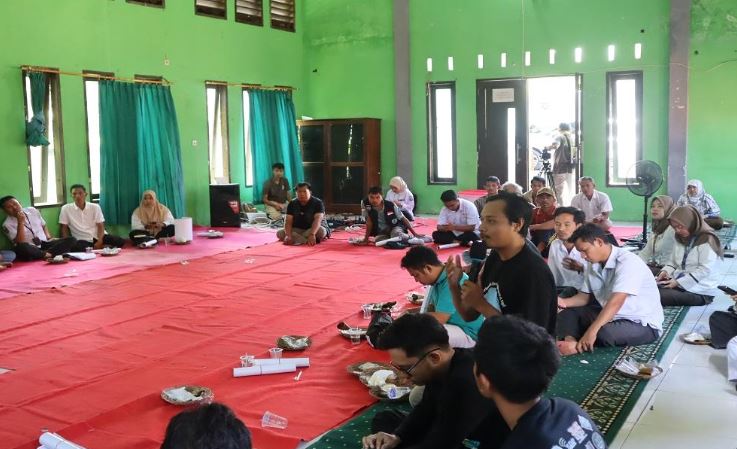
At the end of the forum, participants formulated several recommendations, including strengthening law enforcement for spring protection, rehabilitating water catchment areas, enhancing area-based early warning systems, improving cross-sector coordination, and establishing joint oversight mechanisms. These recommendations will be followed up through a cross-sector action plan with short- to medium-term targets, along with periodic monitoring through coordination forums and progress reporting at the subdistrict and regency levels. Participants also expressed a joint commitment to strengthening landscape governance and spring protection as an initial step toward concrete action on the ground.