Select your language
 ID
ID 


Program Activities
Strengthening Cross-Institution Synergy. Central Sulawesi Forms a Working Group for a Landscape Based Early Warning System for Coastal and River Basin Areas
YSI
Hits: 8
3 minutes read
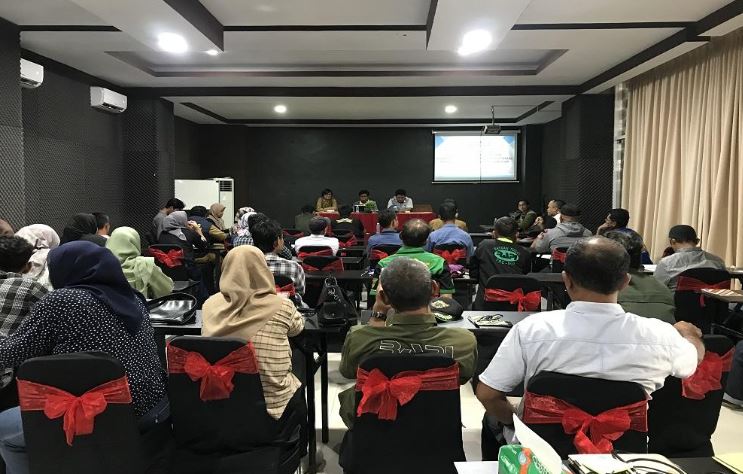
Palu, Central Sulawesi. Efforts to build an integrated and adaptive disaster early warning system continued to advance across the western coastal area of Donggala–Palu and the Sigi–Palu river basin. SHEEP Indonesia facilitated an in depth review of the Early Warning System and the establishment of a Landscape Based Early Warning Working Group. The four day activity took place at Kembang Joyo Hotel in Palu and involved 66 participants from village and urban ward level institutions.
Participants came from villages along the western coast of Donggala District and from upstream, midstream, and downstream areas of the Sigi District river basin. A total of 18 villages and urban wards joined the activity. Representatives attended from the Provincial and District or City Disaster Management Agencies, the Provincial Communication and Information Office, the Palu City Communication Office, the Meteorology Agency’s Geophysics Station in Palu, the Palu–Poso River Basin Management Agency, and the Indonesian Citizen Band Radio Organization in Palu, Donggala, and Sigi. These locations were selected because they face high disaster risks in both coastal and river basin zones.
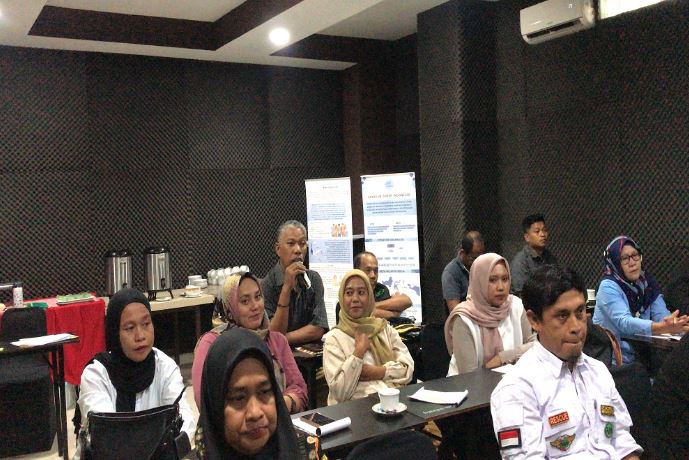
The first day focused on deepening participants’ understanding and identifying institutional roles in strengthening the landscape based early warning system for coastal and river basin areas. Participants examined how a landscape based approach aligned with the characteristics of these zones and addressed coordination challenges across administrative boundaries and local resource use. The Palu Geophysics Station presented key points on extreme weather early warning systems and weather data use to strengthen community readiness for tidal flooding, high waves, and heavy rainfall. The discussion produced an initial draft of the structure and coordination mechanism for the Landscape Based Early Warning Working Group as a collaborative platform across institutions.
The second day focused on finalizing the framework and preparing an action plan for the Landscape Based Early Warning Working Group covering the coastal and river basin areas of Palu–Donggala–Sigi. The discussion highlighted faster earthquake response, from five minutes to three minutes. Participants reviewed the need for Public Coastal Radios in areas with limited signal coverage and improved institutional coordination between the Meteorology Agency, Disaster Management Agency, and Communication Offices for tsunami early warning. They also reflected on lessons from the 1928, 1968, and 2018 tsunamis that underscored the urgency of self evacuation, community education, and preservation of local knowledge. The action plan included radio training, communication route mapping, disaster history documentation, and early warning code simulation and dissemination under the coordination of the District or City Disaster Management Agency with support from the Provincial Agency.
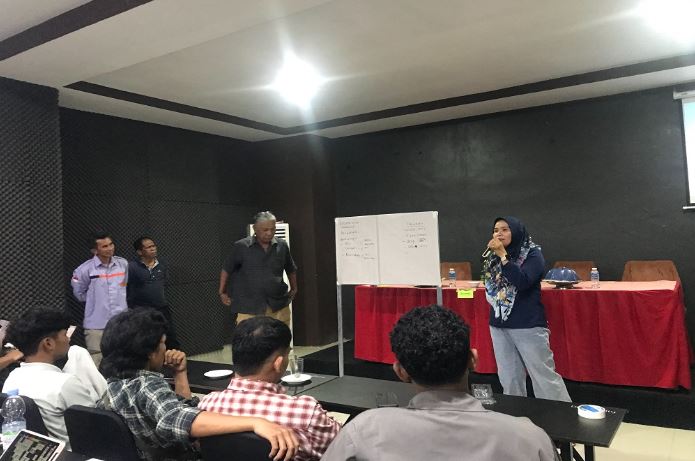
The activity closed with a collective commitment from the Disaster Management Agency, the Meteorology Agency, and the Communication Offices to develop an information dissemination system through mobile applications and community radio and to strengthen communication networks down to village level.
Maryani, a representative from Besusu Barat, stated, “This synergy is crucial so communities are not only recipients of information but also active actors who help maintain and spread disaster information in their environment.” The formation of the Landscape Based Early Warning Working Group marked a strategic step in linking preparedness and emergency response. It aimed to ensure that threat information reached communities quickly, accurately, and in a way they could understand. Through cross institutional collaboration and active community involvement, the early warning system in the Palu–Donggala–Sigi coastal and river basin areas is expected to operate effectively and sustainably and help protect lives in disaster prone regions.