Select your language
 ID
ID 


Program Activities
Landscape-Based ToT on Disaster Risk Reduction and Climate Change Adaptation Strengthens Village Institutional Capacity in North Lombok
YSI
Hits: 2
3 minutes read
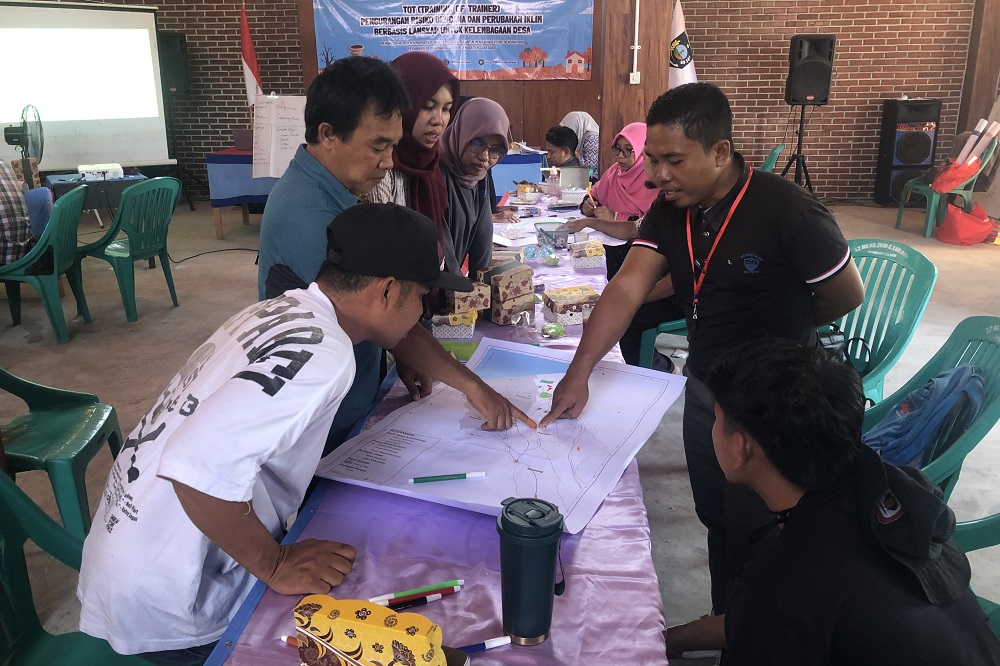
On September 22–23, 2025, the Santong Block area hosted a Landscape-Based Training of Trainers (ToT) on Disaster Risk Reduction (DRR) and Climate Change Adaptation (CCA). The activity involved eight partner villages: Santong, Sesait, Santong Mulia, Pendua, Kayangan, Dangiang, Pansor, and Gumantar. A total of 24 participants (14 men and 10 women) represented various village institutions in the economic, health, disaster, and environmental sectors.
The ToT aimed to strengthen community capacity in managing disaster and climate risks through a landscape approach. It was organized by Yayasan SHEEP Indonesia with support from Diakonie Katastrophenhilfe. The training used the PACDR (Participatory Assessment of Climate and Disaster Risks) method, which emphasizes active community participation. The main focus was on three village institutional sectors: economy, health, and environment/DRR.
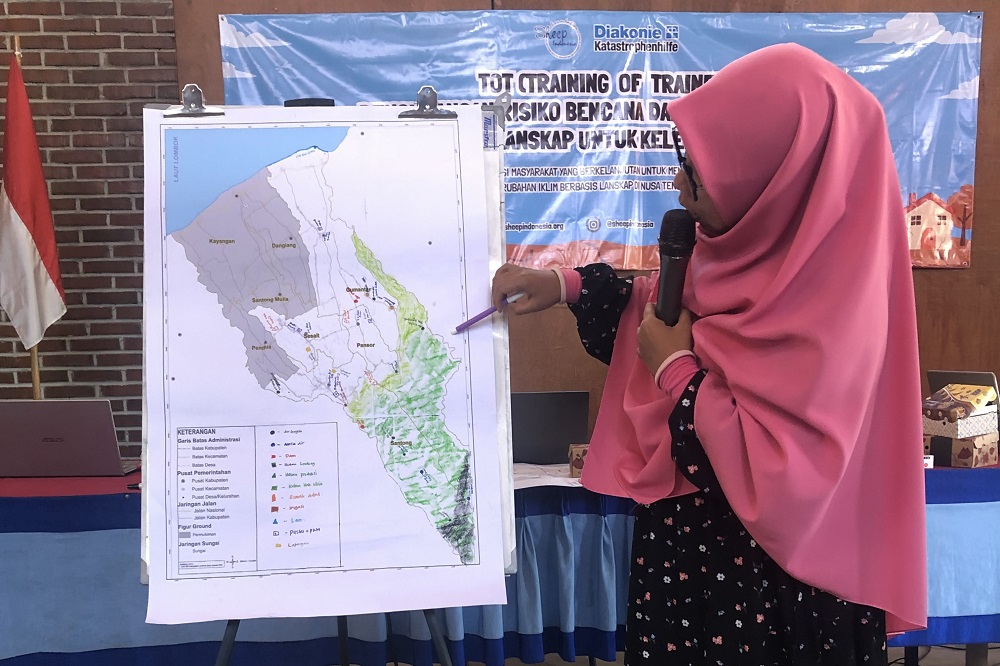
On the first day, participants traced the history of disasters from upstream to downstream, mapped impact chains of various threats, conducted participatory mapping of resources and hazards, and identified the seasonal calendar that shapes local livelihoods. One participant from Santong Mulia Village shared, “We now understand that reduced water flow during the dry season and floods we face are not only caused by extreme weather but also by forest degradation upstream. Through this mapping, we can see how forest conservation affects the sustainability of our lives downstream—our forests, farms, rice fields, and water sources.”
On the second day, participants developed and scored disaster impact matrices, then formulated adaptation strategies based on their village conditions, including:
- Economy: product diversification, plastic waste processing, promotion of resilient and adaptive crops, and business risk management.
- Health: hygiene and sanitation campaigns, strengthening community health post participation, capacity building for DRR and CCA cadres, and tuberculosis screening.
- Environment: reforestation, implementation of local regulations on spring protection, and waste management.
Participants also designed integrated action plans across the three institutional sectors. These plans are expected to serve as joint references for the Santong Block villages.
Subsequently, on September 24–25, 2025, a similar activity took place in the Murus Malang Block area, involving six partner villages: Selengen, Salut, Mumbul Sari, Akar-Akar, Gunjan Asri, and Andalan, with 22 participants (16 men and 6 women).
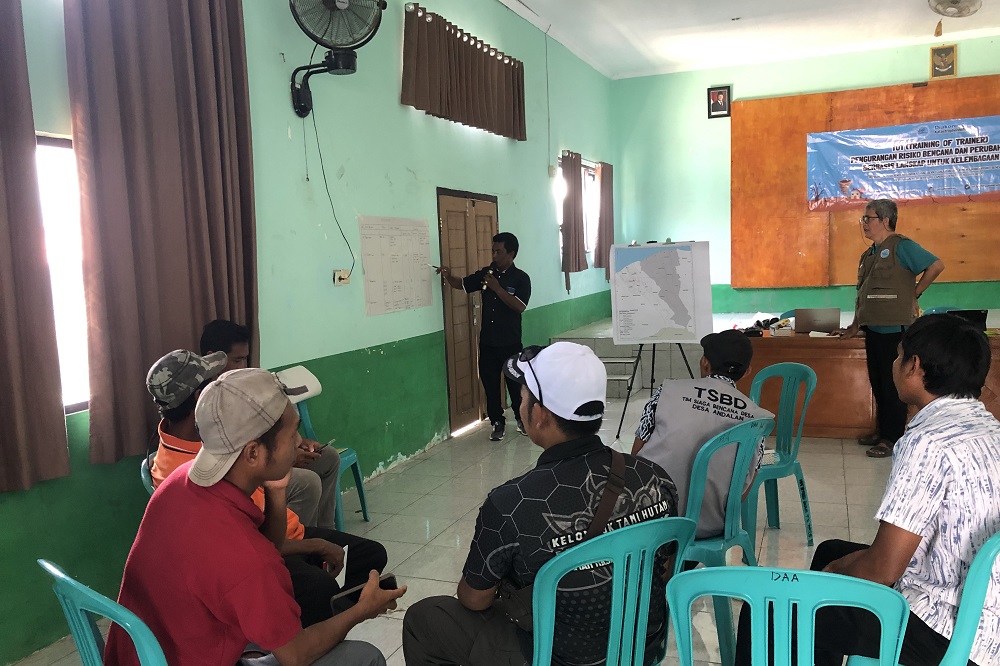
The Murus Malang participants followed the same process. The first day focused on disaster history tracing, threat impact chain analysis, participatory mapping, and seasonal calendar identification. The second day continued with impact matrix development, adaptation planning, and formulation of institutional action plans in the economic, health, and environment/DRR sectors.
This ToT demonstrated how village communities can identify risks, design adaptation strategies, and develop collective action plans. The outcomes include not only documented action plans but also strengthened understanding, skills, and inter-village collaboration within the program area. Moving forward, these ToT results are expected to inform and integrate into the ongoing Village Medium-Term Development Plans and be followed up through joint inter-village forums within the supported landscape areas.